u/zenithfall · r/Siamesecats · 2025
“Like it was said before: Siamese cats are hypoallergenic, but not 100%. My wife and myself are very allergic to cats, and are able to tolerate our Siamese with minimal medication.”View original on Reddit
short hair · Medium · Origin: Thailand (historical Siam)
Reviewed by HypoallergenicCats Editors · Updated May 2026 · 8 min read
The Siamese has been on hypoallergenic shortlists for decades, and the reason is structural: they have a single coat — no woolly undercoat, no double-shed cycle — which means less hair (and less Fel d 1-coated dander) loose in your home. That said, no breed-specific Fel d 1 study has confirmed lower production at the source. Many allergic owners do better with Siamese than with random domestic shorthairs; many others still react. They're also one of the most vocal, demanding, people-attached cats on this list. If you want a cat that follows you to the bathroom and yells at closed doors, the Siamese delivers.
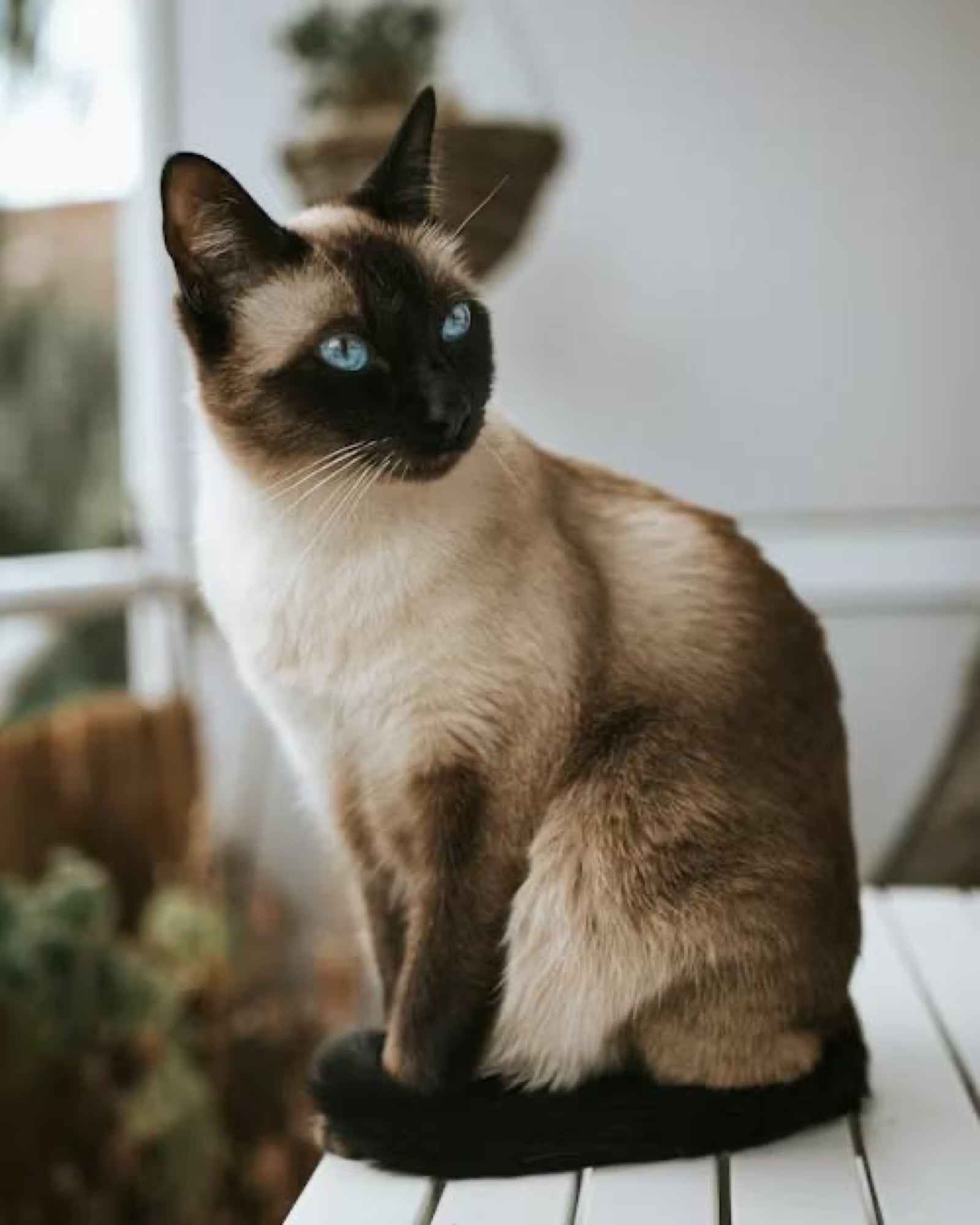
At a glance
Siamese — by the numbers
Allergen signal
Anecdotal
Low-shedding
Less hair shed = less dander loose in your home. No measured Fel d 1 data for this breed.
Grooming needs
2 / 10
Energy level
7 / 10
Trainability
8 / 10
Price range
$600 – $1,500 USD
The science
All cats produce Fel d 1 — a small glycoprotein in saliva and sebaceous secretions that flakes off as dander. Single-coated breeds like the Siamese shed less hair overall, so less dander accumulates on couches and carpets even if per-cat allergen production is normal. The allergen relief many Siamese owners report likely comes from this 'less surface area in your environment' effect, not from lower allergen production at the source.
Allergen levels in homes are strongly influenced by cat shedding behaviour and per-cat allergen production, both of which vary individually rather than by breed. Single-coated, short-haired breeds tend to deposit less dander into the home environment, but no rigorous per-breed Fel d 1 study has singled out the Siamese.
From the community
u/zenithfall · r/Siamesecats · 2025
“Like it was said before: Siamese cats are hypoallergenic, but not 100%. My wife and myself are very allergic to cats, and are able to tolerate our Siamese with minimal medication.”View original on Reddit
u/curiousreader · r/Siamesecats · 2024
“No cats are truly hypoallergenic, BUT purebred Siamese are kind of 'unofficially' hypoallergenic because they have single coats (shed less).”View original on Reddit
u/honest_siamese_owner · r/Siamesecats · 2024
“My husband is extremely allergic to cats and he was allergic to our Siamese. He took allergy pills and nasal spray and suffered through for the cat — go in eyes-open if your allergies are severe.”View original on Reddit
Living with one
Wonderfully low-maintenance — a weekly run with a soft rubber brush, occasional nail trim, and that's it. Bathing every 4-6 weeks can help severely allergic households by physically removing Fel d 1 from the coat, but most Siamese tolerate bathing poorly, so this is a household-by-household decision.
Famously vocal — a Siamese will narrate your entire day in a distinct, hoarse voice that some people find charming and others find unbearable. Listen to recordings before committing. Extremely people-oriented; they hate being left alone for full workdays. Two Siamese, or one Siamese plus another social cat, is almost always happier than one alone.
Long-lived for a pedigreed cat (12-15+ years common, 20 not unheard of). Watch for crossed eyes, kinked tails (cosmetic), progressive retinal atrophy, amyloidosis (kidney/liver), and dental disease. Reputable breeders screen for amyloidosis lineage.
Apartment-friendly if you provide vertical climbing space and don't leave them alone all day. They thrive in pairs.
Recommended products
HypoallergenicCats is reader-supported. We earn a small commission from purchases made through these links — at no extra cost to you.
food
The only cat food clinically proven to reduce allergens in cat hair and dander by an average of 47% in 3 weeks.
$35 / 7 lb bag
Read our review →air-purifier
True HEPA filter that captures 99.97% of airborne particles including dander, dust, and pollen. Quiet enough for the bedroom.
$219 / Up to 403 sq ft
Read our review →allergy-care
Wipe-on solution that binds to dander. Apply weekly to cut allergen exposure noticeably, no bath needed.
$18 / 12 oz
Read our review →Where to adopt
We recommend reputable breeders who allow in-person visits and rescue organizations. Avoid kitten mills and breeders who won't let you meet the parents.
FAQ
They are widely listed as 'hypoallergenic' because they have a single coat and shed very little — which means less Fel d 1-coated dander loose in your home. But no breed-specific study has shown Siamese produce less allergen at the source. Many allergic owners do better with Siamese than with random house cats; some still react. Always do a supervised in-person visit before adopting.
Yes — and there's no toning it down with training. The Siamese voice is distinct (hoarse, low, persistent) and they use it constantly. If you live in a thin-walled apartment, work from home and need silence, or have a partner who hates cat noise, listen to YouTube videos of Siamese 'talking' before committing.
Two, almost always. Siamese are intensely social and prone to separation anxiety when left alone all day. A bonded pair (siblings adopted together, or a Siamese plus another social breed) keeps them happier and reduces destructive boredom behaviour.
From a reputable CFA/TICA breeder, expect $600-$1,500 for a pet-quality kitten. Rescues frequently have adult Siamese available for $100-$300 (regional Siamese rescues are unusually active). Avoid 'breeders' under $400 — likely no health testing.
You might also like
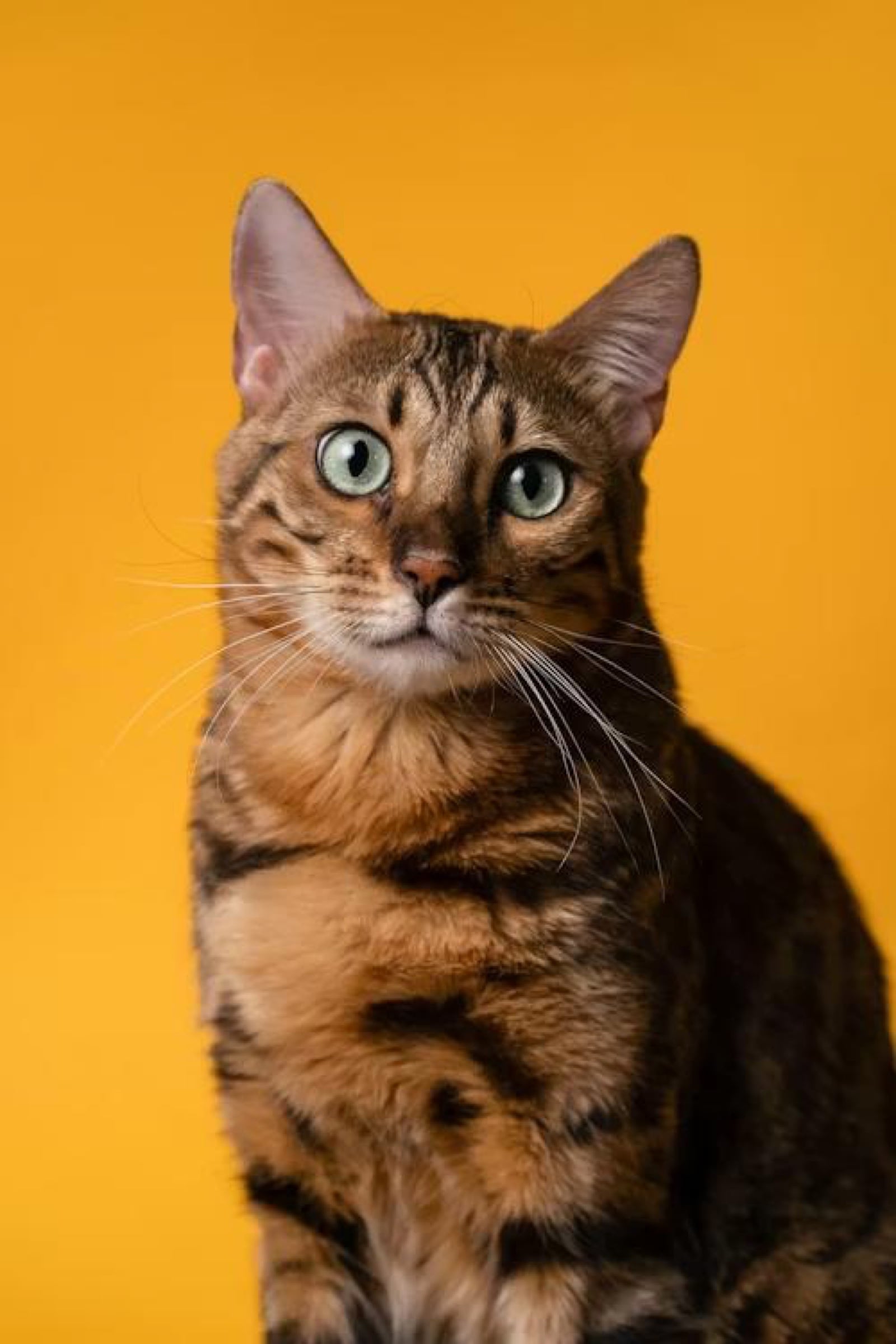
The Bengal is the closest most allergic households will get to keeping a small leopard. Their short, pelted coat is uniquely low-shedding for a cat this size, and many allergic owners report tolerating Bengals better than random domestic cats. That said: no breed-specific Fel d 1 study has ever measured Bengals, and reputable allergy researchers consistently warn that the popular claim Bengals "produce less Fel d 1" is unproven. We list them because the body of allergic-household experience is genuinely large and useful — but the science is anecdotal, not measured.
Read the full review →
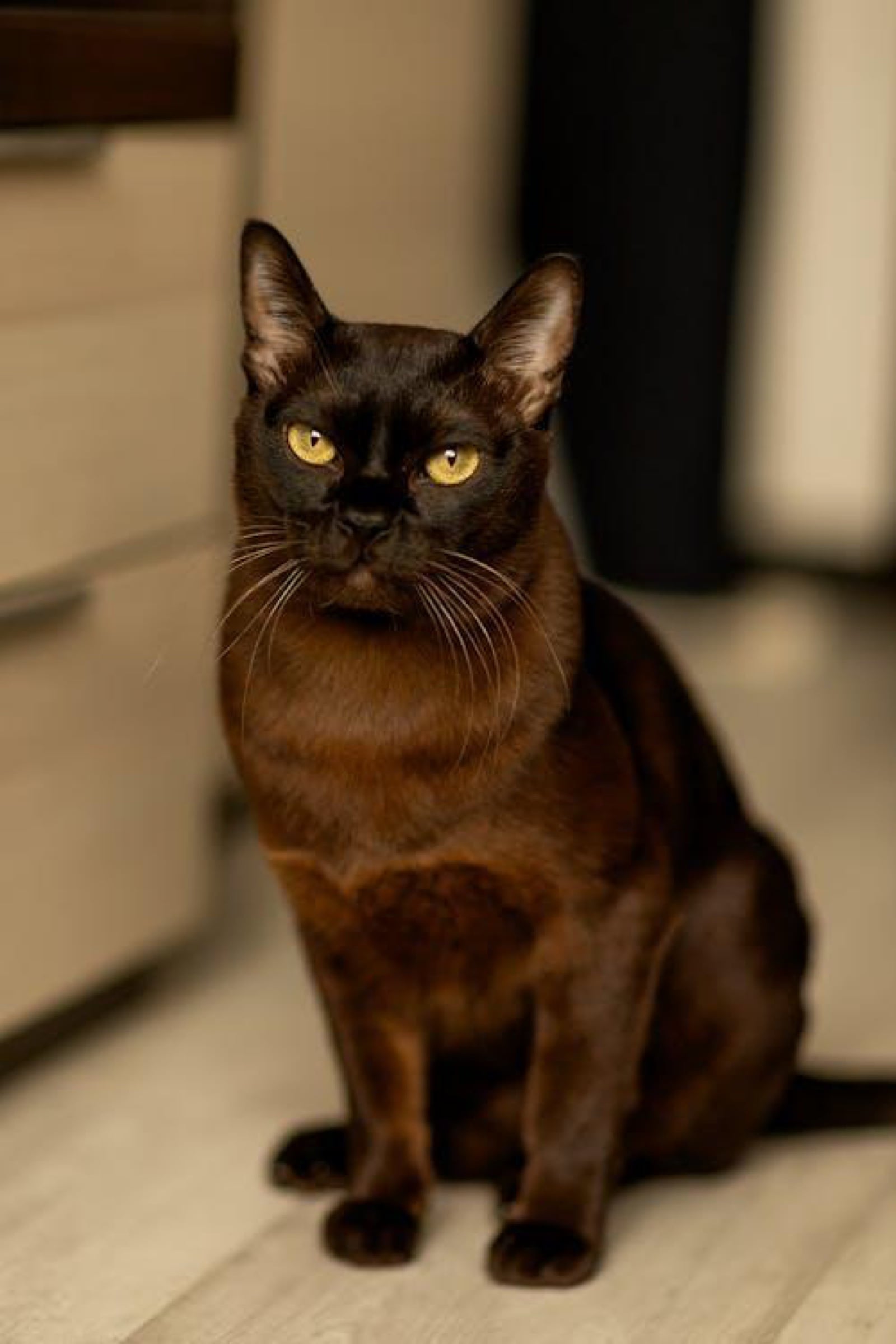
The Burmese is one of the more underrated picks for allergic households on the major hypoallergenic shortlists — denser-bodied than a Siamese, calmer than an Oriental Shorthair, with a short satin coat that lies very flat against the body and sheds remarkably little. Owners report fewer allergic reactions than with typical domestic cats, attributed mostly to the low dander load that comes with minimal shedding. There is no per-breed Fel d 1 study. What the breed has instead is a meaningfully active r/burmesecats community of allergic owners sharing concrete coping strategies — bathing schedules, bedroom rules, HEPA setups.
Read the full review →