u/burmese_allergy_owner · r/burmesecats · 2021
“Burmese cats do tend to be better on allergy sufferers, as long as the allergies aren't very severe — they do produce less dander and their coats shed minimally.”View original on Reddit
short hair · Medium · Origin: Burma/Myanmar (foundation cat: Wong Mau, 1930)
Reviewed by HypoallergenicCats Editors · Updated May 2026 · 8 min read
The Burmese is one of the more underrated picks for allergic households on the major hypoallergenic shortlists — denser-bodied than a Siamese, calmer than an Oriental Shorthair, with a short satin coat that lies very flat against the body and sheds remarkably little. Owners report fewer allergic reactions than with typical domestic cats, attributed mostly to the low dander load that comes with minimal shedding. There is no per-breed Fel d 1 study. What the breed has instead is a meaningfully active r/burmesecats community of allergic owners sharing concrete coping strategies — bathing schedules, bedroom rules, HEPA setups.
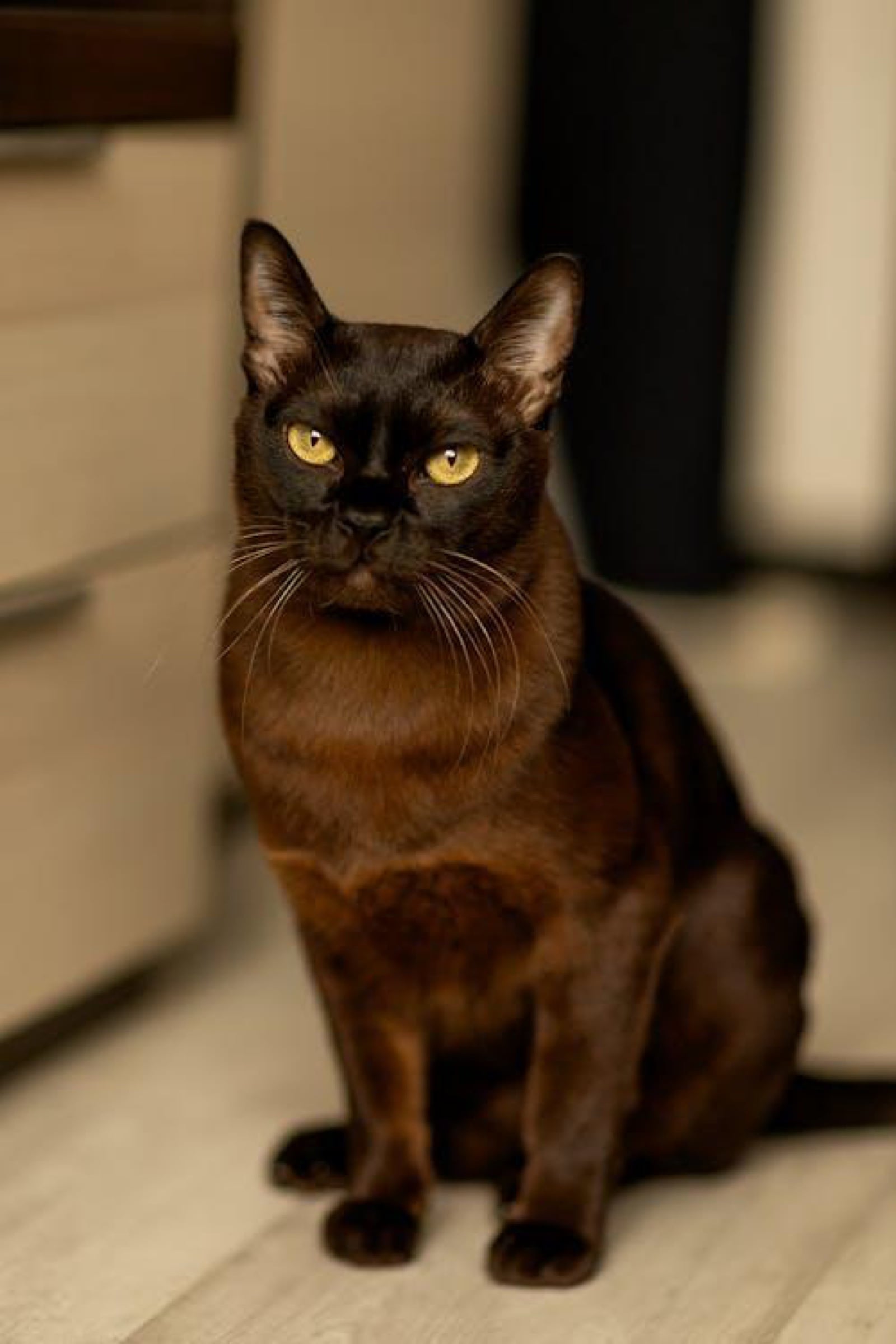
At a glance
Burmese — by the numbers
Allergen signal
Anecdotal
Low-shedding
Less hair shed = less dander loose in your home. No measured Fel d 1 data for this breed.
Grooming needs
2 / 10
Energy level
7 / 10
Trainability
7 / 10
Price range
$800 – $2,000 USD
The science
Burmese cats have a single coat with no undercoat, which produces dramatically less shed hair than typical double-coated breeds. Less hair released into the environment means less Fel d 1-coated dander accumulating on surfaces and in the air. The breed produces the allergen normally in saliva and sebaceous glands — the benefit is environmental load, not source-level reduction.
Lower-shedding single-coated breeds, as a group, deposit measurably less Fel d 1 into household dust than double-coated breeds (2014 Vienna study on hypoallergenic cat breeds). The Burmese has not been individually measured in published Fel d 1 research; its inclusion on hypoallergenic shortlists is based on coat structure and consistent owner reports.
From the community
u/burmese_allergy_owner · r/burmesecats · 2021
“Burmese cats do tend to be better on allergy sufferers, as long as the allergies aren't very severe — they do produce less dander and their coats shed minimally.”View original on Reddit
u/burmese_update_parent · r/burmesecats · 2024
“Update: my (allergic) family got a Burmese and it's going great. I'd posted earlier asking for everyone's experiences with their Burmese and allergies — and now my parents have one and the reactions are much milder than expected.”View original on Reddit
u/honest_burmese_breeder · r/burmesecats · 2022
“My breeder for example has [an] allergy on her Burmese cats. Mostly allergy occurred because of protein in cat's saliva which they spread by their grooming. Even the breeder isn't claiming the breed is allergy-proof.”View original on Reddit
Living with one
Very low — the satin coat is short, lies flat, and needs nothing more than an occasional rubber-mitt pass. Bathing every 4-6 weeks meaningfully reduces allergen load for sensitive households; most Burmese tolerate water well if introduced young.
Calmer than other Siamese-family breeds — more lap-oriented, less frantic, but still intensely people-attached. They are described in breed references as 'dog-like' and 'velcro cats' — they will follow you, sleep on you, and demand to participate in your daily routine. They are notably good with respectful children.
Generally healthy with a 12-16 year lifespan. Watch for hypokalemia (Burmese-specific muscle weakness condition, screened genetically by reputable breeders), diabetes (the breed has elevated risk), and flat-faced (contemporary type) breathing issues. Choose traditional or moderate type over extreme contemporary if respiratory health matters.
Apartment-friendly. They prefer being with people over having huge territory. A bonded pair of Burmese, or one Burmese plus a social companion, handles workday absences much better than a single Burmese alone.
Recommended products
HypoallergenicCats is reader-supported. We earn a small commission from purchases made through these links — at no extra cost to you.
food
The only cat food clinically proven to reduce allergens in cat hair and dander by an average of 47% in 3 weeks.
$35 / 7 lb bag
Read our review →air-purifier
True HEPA filter that captures 99.97% of airborne particles including dander, dust, and pollen. Quiet enough for the bedroom.
$219 / Up to 403 sq ft
Read our review →allergy-care
Wipe-on solution that binds to dander. Apply weekly to cut allergen exposure noticeably, no bath needed.
$18 / 12 oz
Read our review →Where to adopt
We recommend reputable breeders who allow in-person visits and rescue organizations. Avoid kitten mills and breeders who won't let you meet the parents.
FAQ
Not in the strict medical sense — they produce Fel d 1 like all cats. They are widely listed as 'allergy-friendly' because their single coat sheds very little, which reduces the Fel d 1-coated dander load in your home. The r/burmesecats community has many real reports of allergic households doing well with the breed when allergies are mild-to-moderate. Severe allergies will likely still react. Always do a multi-hour in-person visit before committing.
Traditional (or 'European') Burmese have a more moderate, rounded head shape and balanced body. Contemporary (or 'American') Burmese have a much more compressed face and shorter nose, which can predispose to breathing issues and tearing eyes. If respiratory health matters — and it should, especially if you have any household members with asthma — choose Traditional/Moderate type.
Not happily. Burmese are intensely people-attached and prone to depression-like withdrawal when left alone too much. The standard advice from the r/burmesecats community is: if everyone in your household leaves for 8+ hours daily, adopt two Burmese (siblings if possible) rather than one. Two Burmese together is often less work than one bored Burmese alone.
From a reputable CFA-registered breeder, $800-$2,000 for a pet-quality kitten. Show-quality lines and traditional type run higher. The breed has specific genetic risks (hypokalemia, diabetes predisposition) that legitimate breeders test for — avoid 'breeders' offering Burmese under $600 without documented health testing.
You might also like
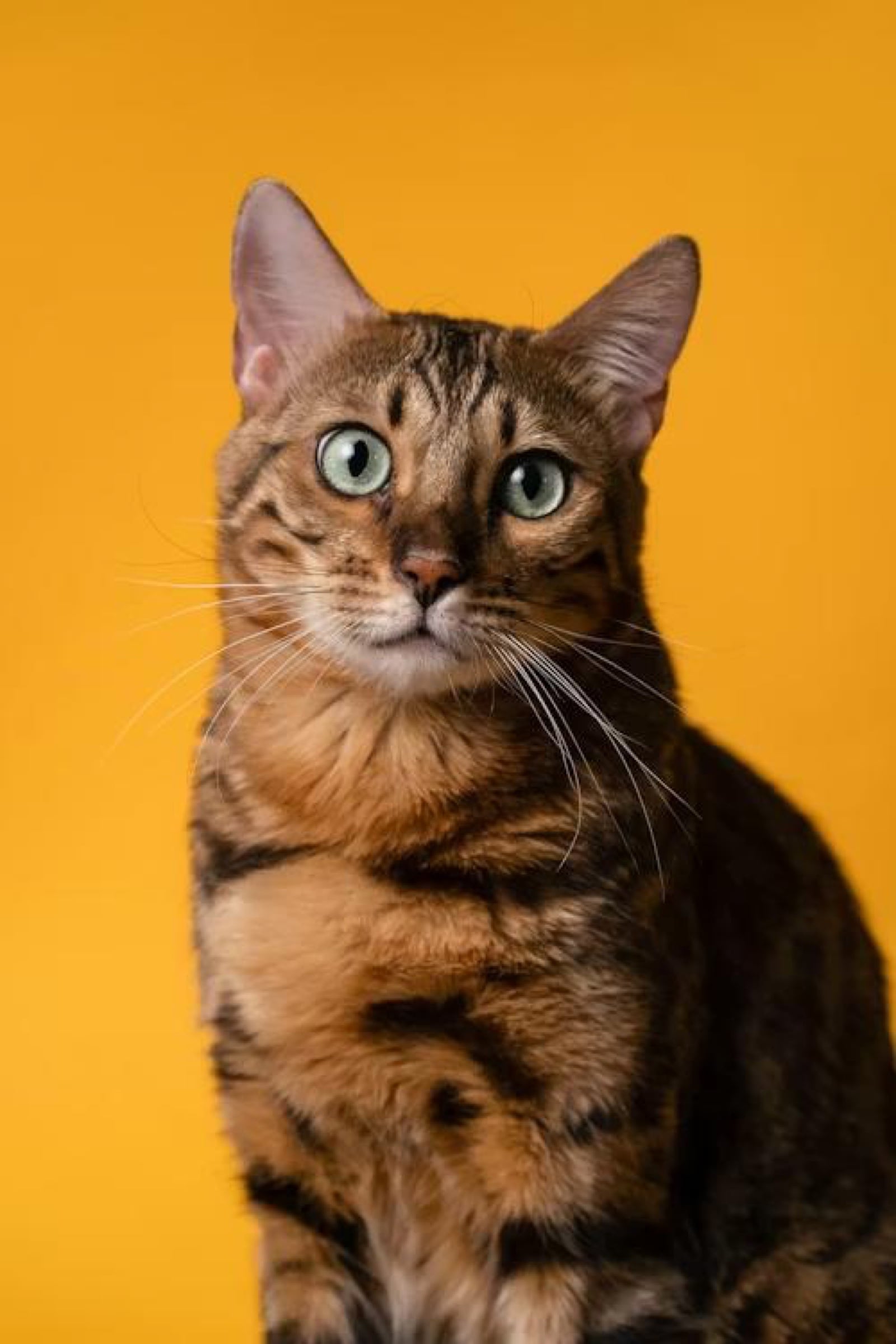
The Bengal is the closest most allergic households will get to keeping a small leopard. Their short, pelted coat is uniquely low-shedding for a cat this size, and many allergic owners report tolerating Bengals better than random domestic cats. That said: no breed-specific Fel d 1 study has ever measured Bengals, and reputable allergy researchers consistently warn that the popular claim Bengals "produce less Fel d 1" is unproven. We list them because the body of allergic-household experience is genuinely large and useful — but the science is anecdotal, not measured.
Read the full review →
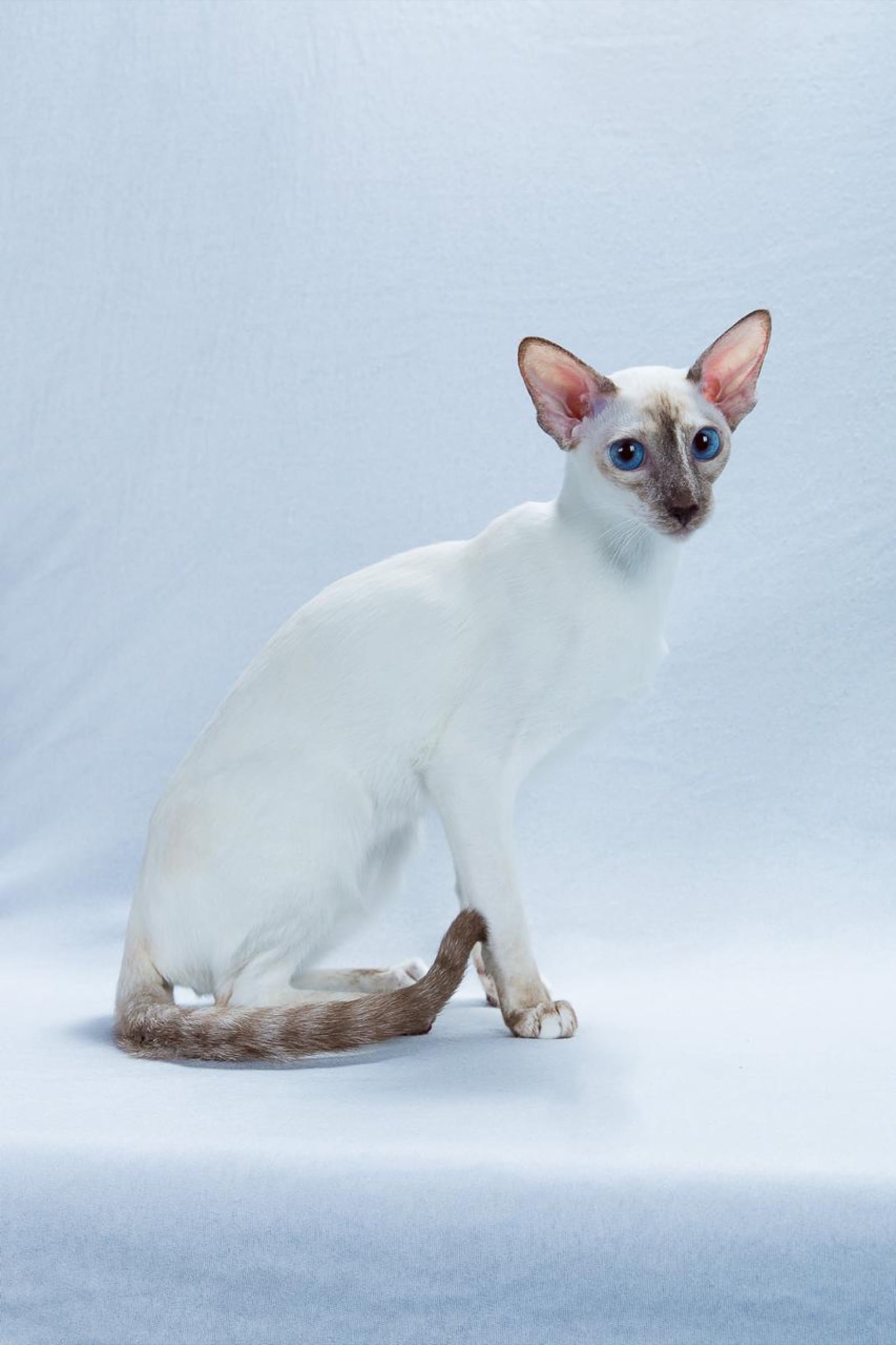
The Colorpoint Shorthair is, in the U.S. CFA registry, the Siamese — except in colours and patterns the Siamese isn't allowed to be (red point, cream point, lynx point, tortie point). Same body, same single coat, same voice. Outside the U.S., this cat is just called 'Siamese' and the distinction doesn't exist. We list it as a separate breed because that's how it's registered in the largest U.S. cat registry, and because allergy-shopping readers do encounter it on hypoallergenic listicles. The allergy profile is identical to the Siamese: single-coat, low-shedding, no breed-specific Fel d 1 study, an environmental-load benefit rather than a measured reduction.
Read the full review →